Why the Sky Is Blue and Sunsets Are Red
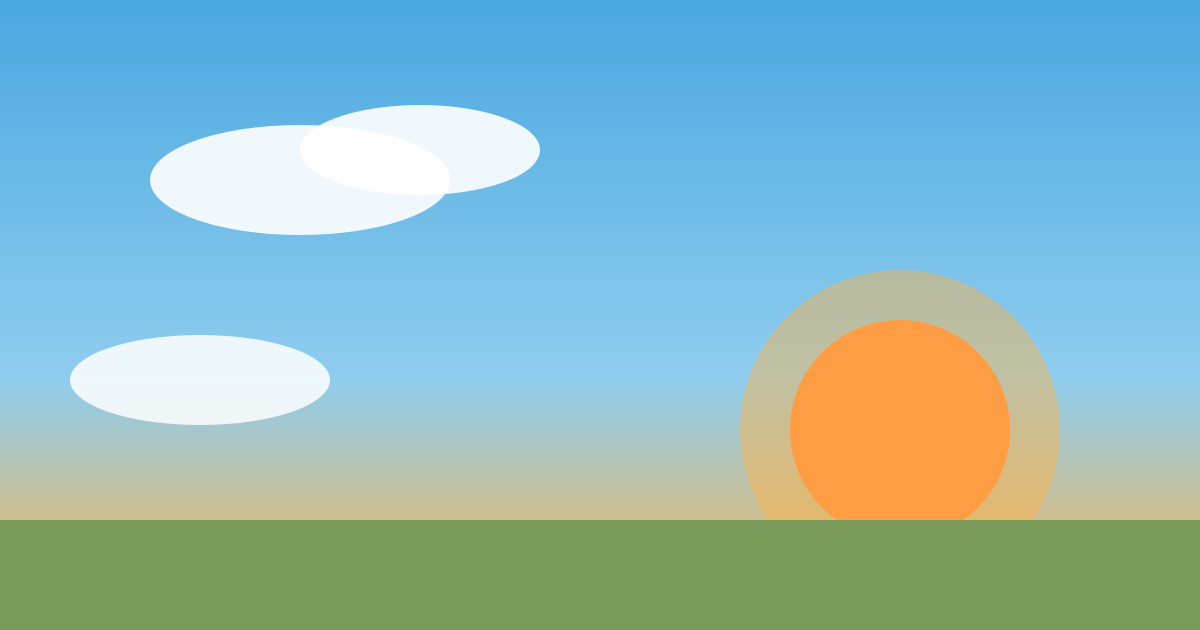
Look up on a clear day and the sky is blue. Watch the same sky at sunset and it can turn orange, pink, and deep red. The sun itself has not changed colour, and the air has not been painted. The change comes from the way sunlight interacts with the tiny particles in Earth's atmosphere. Once you understand that interaction, both the blue day sky and the red sunset become two sides of the same simple story.
Sunlight may look white, but it is actually a mix of many colours. You can see this mix when sunlight passes through a prism or when rain creates a rainbow. Each colour is light with a different wavelength, which is the distance between one wave and the next. Blue light has a shorter wavelength than red light, and that small difference changes how each colour behaves in the air.
Sunlight Meets the Atmosphere
Earth is surrounded by a layer of gases, mostly nitrogen and oxygen. These gas molecules are far too small to see, but they are not too small to affect light. When sunlight enters the atmosphere, it bumps into these molecules and gets scattered, which means it is sent off in many different directions.
This scattering does not affect all colours equally. Shorter wavelengths, like blue and violet, are scattered much more strongly than longer wavelengths, like yellow and red. As a result, blue light is thrown around the sky in every direction, and it reaches your eyes from all parts of the sky, not just from the direction of the sun.
That is why the sky looks blue even when you are not looking directly at the sun. You are seeing scattered blue light coming from the air itself. The effect is called Rayleigh scattering, named after the scientist who explained it, but you do not need the name to picture it: sunlight comes in, blue light bounces around the most, and the sky glows blue.
Why Blue, Not Violet?
If violet light is scattered even more strongly than blue, a natural question is why the sky is not violet. Part of the answer is that sunlight contains less violet light than blue light to begin with. Another part is that some violet light is absorbed higher in the atmosphere before it reaches the lower sky.
The human eye also plays a role. Our eyes are more sensitive to blue than to violet, so even when violet light is present, we tend to notice the blue more. The result is the familiar blue we see on a clear day, rather than a purple or violet sky.
What Changes at Sunset?
At midday, sunlight travels through a relatively short path of atmosphere to reach you, because the sun is high overhead. At sunset, the sun is low on the horizon, so its light must travel through a much longer stretch of air before it reaches your eyes.
Along that long journey, most of the blue light is scattered away, again and again, until very little of it is left travelling in a straight line towards you. What remains is mainly the longer wavelengths: yellow, orange, and red. Those colours are scattered less, so they survive the long trip and dominate what you see near the sun.
Clouds can make sunsets even more dramatic. When clouds catch the remaining orange and red light, they glow with those colours against a darker sky. Dust, smoke, and tiny particles from volcanoes or fires can also scatter more light and deepen the reds, which is why some sunsets after a large eruption or a dusty day look especially vivid.
Why Some Clouds Look Dark
Clouds are made of tiny water droplets or ice crystals. When a cloud is thin, sunlight passes through easily and the cloud looks white, because all colours are scattered together. When a cloud is thick, less light can pass through to the bottom of it.
The underside of a thick cloud therefore looks grey or dark, not because the cloud itself is dark, but because it is in shadow. The top of the same cloud, facing the sun, may still look bright white. This is the same reason a thick curtain looks darker than a thin one when light shines behind it.
Dark clouds often signal rain, but not always. A cloud can look dark simply because it is thick and tall. Rain depends on whether the droplets inside have grown heavy enough to fall, not just on how dark the cloud looks from below.
Common Misconceptions About the Sky
One common misconception is that the sky is blue because it reflects the ocean. It is the other way around in a sense: the ocean often looks blue partly because it reflects the blue sky, and partly because water itself absorbs red light more than blue. The sky would be blue even over dry land, as anyone who has crossed a desert can confirm.
Another misconception is that the sun changes colour at sunset. The sun's actual colour does not change during the day. What changes is how much of its light is scattered away on the way to your eyes, and which colours survive the journey.
Frequently Asked Questions
Why is the sky sometimes white instead of blue?
When the air contains many larger particles, such as dust, pollution, or water droplets, scattering becomes less selective. Many colours are scattered together, and the mix looks white or pale grey, rather than a clear blue.
Why does the moon look orange near the horizon?
For the same reason the setting sun looks orange. Moonlight near the horizon travels through a long path of air, blue light is scattered away, and the remaining orange and red light reaches your eyes.
Do other planets have blue skies?
Not necessarily. A planet's sky colour depends on its atmosphere. Mars, for example, has a thin atmosphere with fine dust, and its sky often looks butterscotch or pinkish, while sunsets there can appear blue around the sun, because the dust scatters light differently.
Why is the sky dark at night?
At night, your part of Earth faces away from the sun, so there is almost no sunlight entering the atmosphere above you to be scattered. Without scattered sunlight, the sky looks dark, and you can see stars and the moon.
Conclusion
The blue sky of daytime and the red sky of sunset are not two separate mysteries. They are both caused by sunlight being scattered by air. Blue light scatters easily, so it fills the daytime sky. At sunset, sunlight travels farther through the air, the blue is scattered away, and the reds and oranges that remain paint the evening sky.
The next time you look up, you are not just seeing a colour. You are seeing sunlight, broken apart and bounced around by an invisible ocean of air above your head.